5 Beautiful Crochet Flowers for Bouquets, Gifts & Home Decor
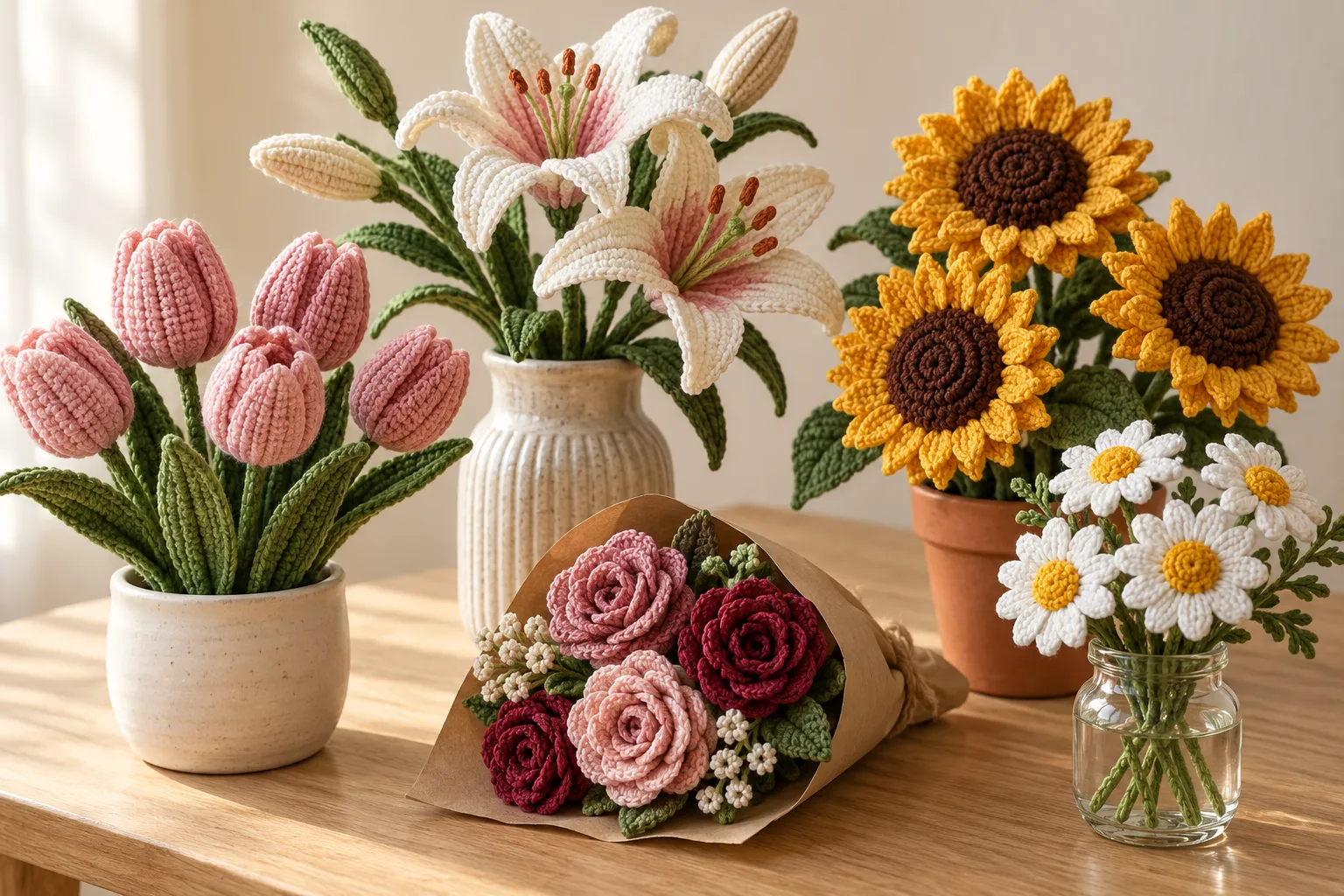
A small vase of crochet flowers can bring color to a quiet corner, turn a simple shelf into a display, or become a thoughtful handmade gift. Each bloom gives you room to play with color and texture, whether you prefer soft pink tulips or cheerful yellow sunflowers.
The flowers below offer five different starting points. Some suit compact flower pots, while others look lovely gathered into a wrapped bouquet. You’ll find suggestions for materials, color combinations, customization, and display, along with practical details to consider before choosing a pattern.
This is an inspiration and planning guide rather than a step-by-step pattern. Exact yarn quantities, hook sizes, finished measurements, difficulty, and completion times depend on the pattern you choose.
Table of Contents
1. Crochet Tulip Flower Pot
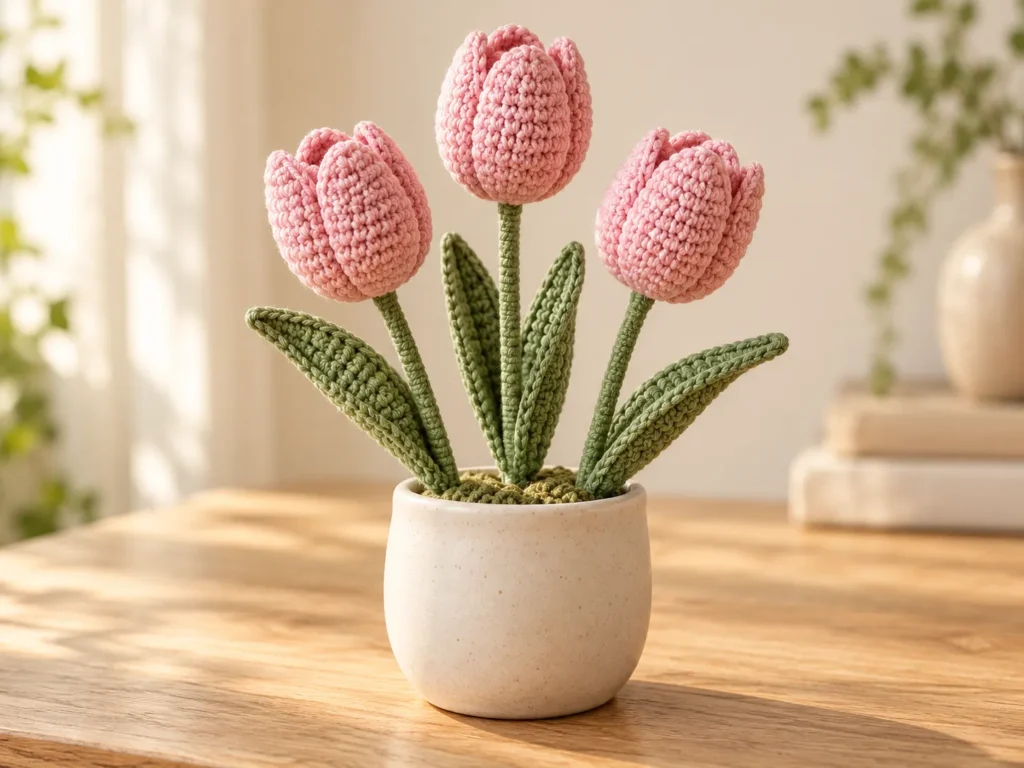
A crochet tulip flower pot makes a lovely little accent for a desk, bookshelf, or bedside table. The rounded flower heads have a clean, simple silhouette, while the upright leaves give the arrangement height without making it feel crowded.
For a first arrangement, try three tulips in a neutral pot. Keeping the blooms similar in size creates a tidy finish, while slightly different stem heights make the display feel more natural.
Difficulty level: Pattern-dependent. Look for a design with simple flower heads, basic leaves, and clear assembly instructions if you are still building confidence.
Estimated time: Allow for the flowers, leaves, and pot assembly. Making one complete tulip first will help you estimate the time needed for the rest.
Materials You’ll Need
Depending on your chosen design, the supplies may include:
- Yarn for the tulip heads, leaves, and stems.
- A crochet hook matched to the pattern.
- A yarn needle and scissors.
- Stuffing for closed, padded flower heads.
- Stem supports if required.
- A small container or materials for a crocheted pot.
- An insert or base to hold the stems in position.
Decide whether you want a crocheted pot or a ready-made container before buying supplies. A ceramic pot can provide useful weight, while a crocheted version gives the whole project a consistent handmade look.
Size & Dimensions
Choose the pot before settling on the arrangement’s height. The flowers should rise clearly above the rim, with enough space for the leaves to remain visible.
Follow the pattern’s measurements for each tulip, then test the stems in your container before securing them. This makes it easier to adjust the overall balance.
Best Color Combinations
- Blush pink, sage green, and cream: A gentle combination for a bedroom or reading corner.
- Peach, pale yellow, and ivory: A light, fresh palette for a kitchen shelf.
- Red, deep green, and terracotta: A stronger contrast that makes the flower heads stand out.
Using one flower color keeps the arrangement cohesive. For a mixed display, choose shades with a similar softness or intensity.
Customization & Variations
Make a single tulip for a narrow pot, or group several stems in a wider container. You can also combine closed buds with more open flower shapes if your chosen patterns provide those options.
A ribbon around the pot or a small handwritten gift tag adds a personal touch without covering the crochet work.
Perfect For
Tulip pots work well as desk decorations, teacher gifts, housewarming presents, and small handmade thank-you gifts.
Pro Tips & Care
Check the arrangement from the front and sides before fixing the stems in place. Leaves that look balanced from one angle may hide a flower from another.
If your design uses stuffing, add it gradually to avoid stretching the fabric. Dust gently, and choose a cleaning method suitable for both the yarn and the pot’s internal supports.
2. Crochet Lily Bouquet
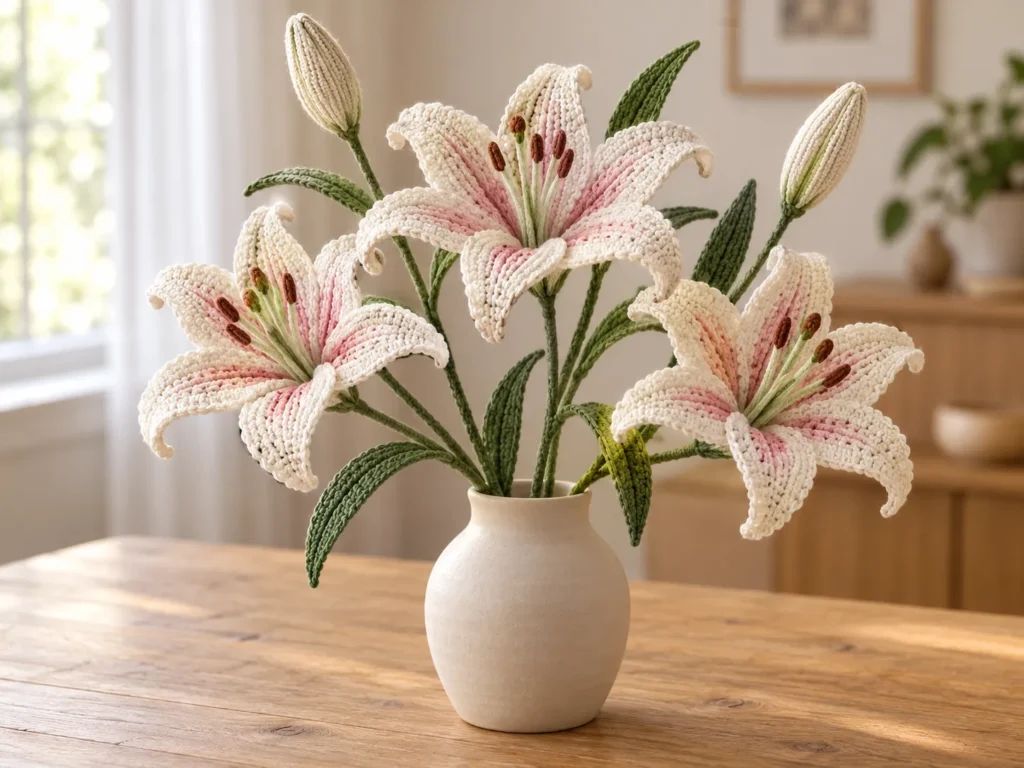
A crochet lily bouquet has a more open, sculptural appearance. The broad petals and prominent centers give each flower plenty of detail, so a few carefully arranged stems can make a complete display.
Lilies suit arrangements where the individual blooms have room to show. Instead of packing them tightly together, angle the flower heads slightly outward and let some green foliage remain visible between them.
Difficulty level: Check the specific pattern. Designs with separately shaped petals, detailed centers, and supported stems require particular attention during assembly.
Estimated time: Plan for both crocheting and shaping the individual pieces. Assembly deserves its own working session.
Materials You’ll Need
A lily design may call for:
- Yarn in the main petal color.
- A contrasting shade for petal details or flower centers.
- Green yarn for leaves and stems.
- The hook specified by the pattern.
- A yarn needle and scissors.
- Floral wire or other supports where the design requires them.
- Materials for the stamens, as directed.
- A vase or bouquet wrapping.
Choose a yarn that lets the shaping remain visible. Heavy texture can obscure the small details that give lily petals their character.
Size & Dimensions
Open lilies need room around the flower heads. Check the pattern’s finished flower width before deciding how many stems will fit your vase.
A useful approach is to finish one bloom, place it in the intended container, and judge the space it occupies before making the rest.
Best Color Combinations
- Ivory with pale yellow centers: A restrained, classic combination.
- Soft pink with deeper pink details: A gentle palette that highlights the petal shape.
- Orange with warm brown accents: A bolder option for a colorful room.
Let one main color lead the arrangement, especially if the petals already have contrasting details.
Customization & Variations
Combine open flowers with buds if your pattern includes them. Varying the stages of bloom can make a bouquet feel more natural without introducing extra colors.
For a gift, wrap the lower stems in plain paper and finish with ribbon. Keep the wrapping below the flowers so the petals remain the focus.
Perfect For
Lily bouquets suit anniversary gifts, decorative centerpieces, and handmade arrangements for special occasions.
Pro Tips & Care
Lay out the petals before attaching them, and compare their placement as you work. Small changes in angle can noticeably affect the final shape.
Follow the pattern’s shaping or blocking instructions, taking the yarn’s care requirements into account. Store the bouquet with space around the blooms so the petals do not become compressed.
3. Crochet Rose Bouquet
Crochet roses bring a familiar, romantic shape to handmade arrangements. They can look understated in soft neutral shades or more expressive in red, burgundy, and deep pink.
The flower’s construction makes a difference to its appearance. Some designs create a tightly rolled center, while others build a wider bloom from separate petals. Choose the finished shape you like before committing to a whole bouquet.
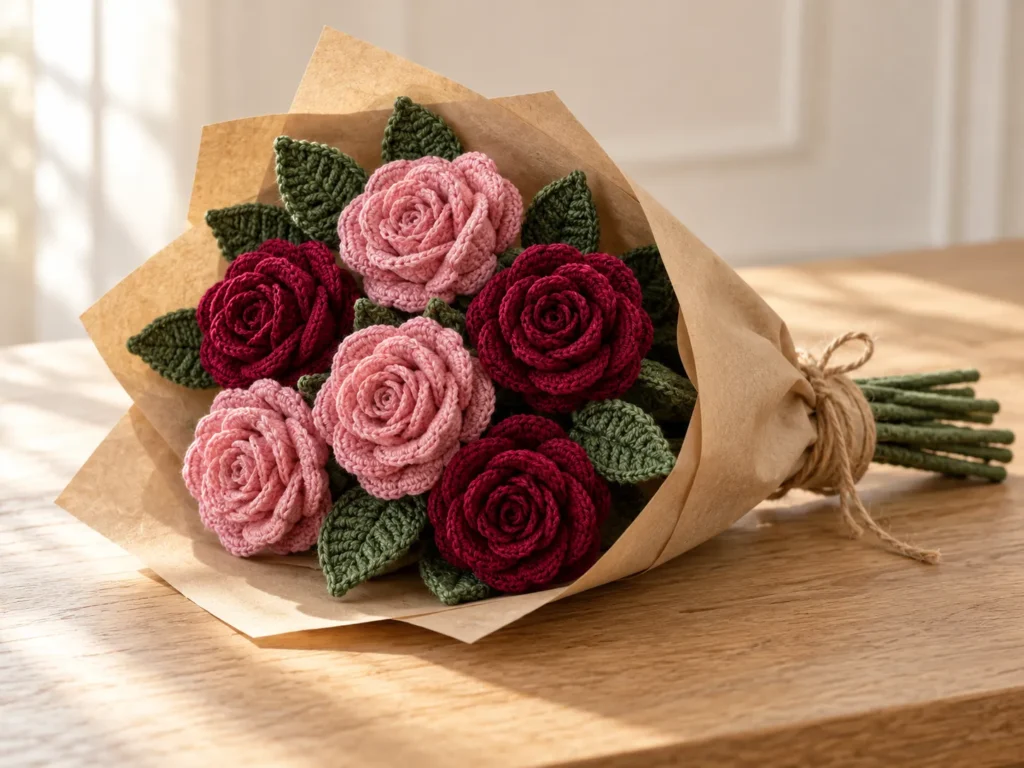
Difficulty level: Varies with construction. For one documented option, Yarnspirations labels its Lily Sugar’n Cream Rose Bouquet pattern as easy.
Estimated time: Complete one rose, including the stem and leaves, before planning your bouquet schedule.
Materials You’ll Need
Typical supplies depend on the pattern but may include:
- Yarn for the rose heads.
- Green yarn for leaves and the flower bases.
- A suitable crochet hook.
- A yarn needle and scissors.
- Stem supports where required.
- Bouquet paper, ribbon, or a vase.
If you combine patterns from different designers, compare their recommended yarn weights and finished dimensions. Otherwise, one rose may look much larger or heavier than the others.
Size & Dimensions
Decide whether you want a small cluster of blooms or an arrangement with more space between stems.
As a specific reference, the Yarnspirations Rose Bouquet pattern lists an approximate flower width of 4 inches (10 cm). Other rose patterns can produce very different sizes.
Best Color Combinations
- Dusty pink, cream, and sage: Soft colors for an understated gift.
- Burgundy, blush, and deep green: A richer combination with contrast.
- Peach, ivory, and muted coral: Warm shades that work well with simple paper wrapping.
For a single-color bouquet, variation can come from the openness of the blooms rather than additional yarn colors.
Customization & Variations
Mix rosebuds with full flowers when suitable patterns are available. A few leaves placed between the blooms can break up a dense arrangement and make the flower shapes easier to see.
You can also present one rose on its own. A neatly finished stem and simple tag are often enough.
Perfect For
Crochet rose bouquets make thoughtful anniversary gifts, Valentine’s Day presents, birthday gifts, and decorative keepsakes.
Pro Tips & Care
For rolled designs, adjust the flower’s shape before sewing through the base. Check that the center and outer petals sit the way you want, then secure the layers carefully.
Support the flower heads when storing the bouquet. Avoid placing heavy wrapping or other objects on top of the petals.
Pattern to explore: Lily Sugar’n Cream Rose Bouquet by Yarnspirations.
4. Crochet Sunflower
A crochet sunflower adds a strong focal point to an arrangement. The contrast between the dark center and bright petals makes the shape easy to appreciate, even from across a room.
One sunflower can look complete in a small vase. In a mixed bouquet, try using it as the main bloom, with smaller flowers and foliage arranged around it.
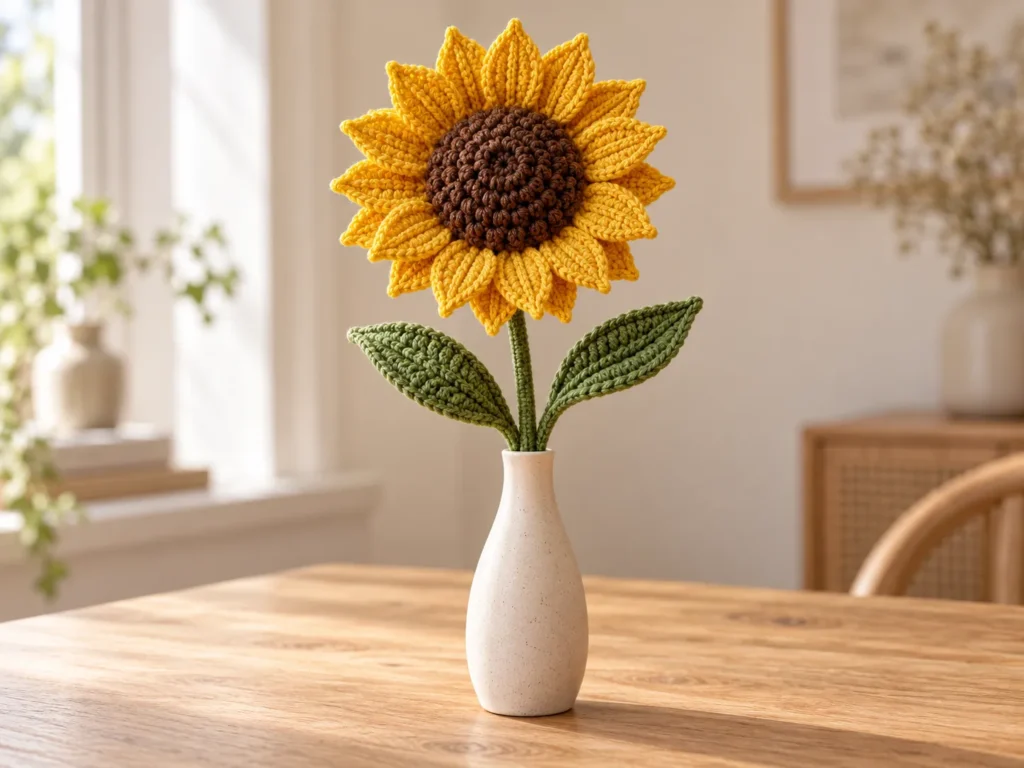
Difficulty level: Pattern-dependent. Flat decorative sunflowers and supported three-dimensional stems involve different construction and finishing skills.
Estimated time: Include time for the center, petals, any backing, leaves, and stem assembly.
Materials You’ll Need
Depending on the design, you may need:
- Yellow or golden yarn for the petals.
- Brown yarn for the center.
- Green yarn for the leaves and stem.
- The recommended hook.
- A yarn needle and scissors.
- Stuffing if the center is padded.
- A stem support appropriate for the finished flower.
Check how the pattern attaches the stem to the flower head. This connection matters particularly when the bloom is wide or padded.
Size & Dimensions
Consider the flower head’s width alongside the height of the stem. A large sunflower needs an arrangement that can support its visual and physical weight.
Try the finished bloom in your chosen vase before completing several stems. A narrow or lightweight container may need a different arrangement to remain stable.
Best Color Combinations
- Golden yellow and dark brown: A familiar sunflower palette.
- Mustard, chocolate, and olive: Muted shades for warm interiors.
- Pale yellow, tan, and sage: A softer interpretation for neutral decor.
A simple vase gives these crochet flowers space to stand out without competing patterns.
Customization & Variations
Make one statement flower or combine several at different heights. For a mixed bouquet, smaller daisies can introduce a lighter shape around the broad sunflower heads.
A flat sunflower design may also suit decorative accessories, but choose a pattern intended for that use rather than assuming a stemmed flower can be converted directly.
Perfect For
Sunflowers suit cheerful birthday gifts, kitchen displays, rustic decor, and seasonal arrangements.
Pro Tips & Care
Attach the flower head securely before arranging the leaves. If it tilts or turns unexpectedly, check the connection and support against the pattern instructions.
Dust around the center and between the petals with a soft brush. Avoid pulling on the petals while cleaning or repositioning the flower.
5. Crochet Daisy Bouquet
A crochet daisy bouquet has a relaxed, uncomplicated charm. White petals and yellow centers look fresh together, while the repeated flower shape creates a cohesive arrangement.
Daisies also make useful companion flowers. Their lighter appearance can balance a large sunflower or soften a bouquet built around more detailed blooms.
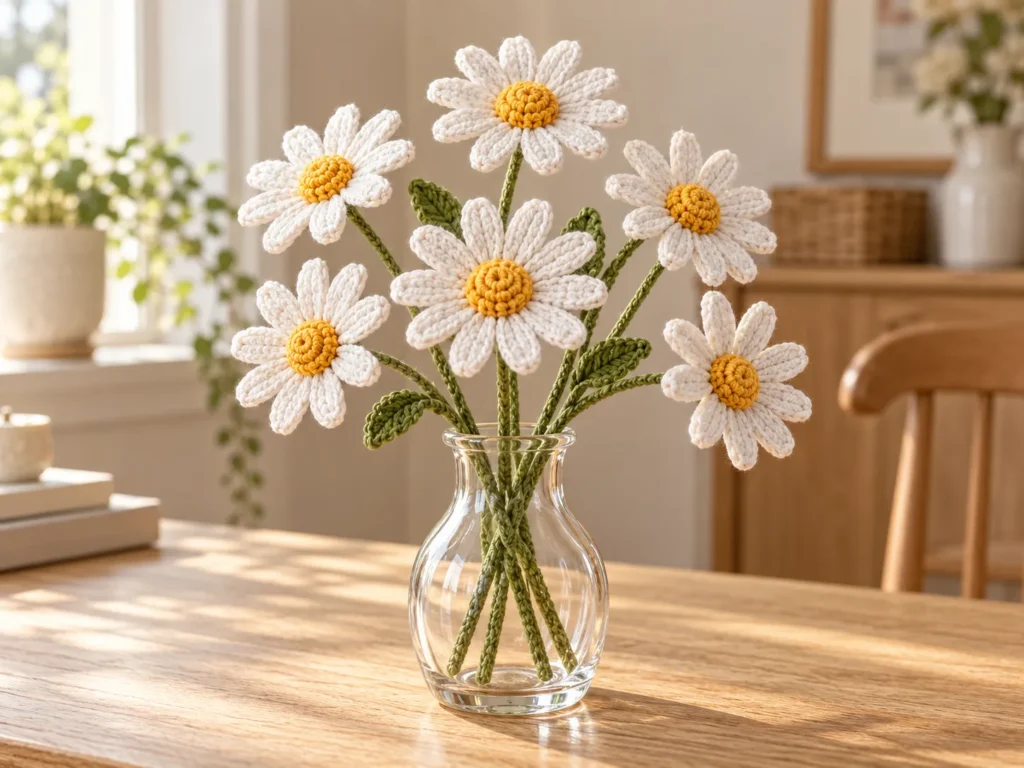
Difficulty level: Varies by design. Yarnspirations labels its Lily Sugar’n Cream Daisy Bouquet pattern as easy.
Estimated time: Base your estimate on a complete stem, including finishing, rather than only the flower head.
Materials You’ll Need
Your pattern may specify:
- White or colored yarn for the petals.
- Yellow yarn for the centers.
- Green yarn for stems and leaves.
- A crochet hook suited to the pattern.
- A yarn needle and scissors.
- Floral wire or another specified stem support.
- A small vase or bouquet wrapping.
Use yarns with compatible weights unless the design intentionally calls for different textures.
Size & Dimensions
For a concrete example, the Yarnspirations Daisy Bouquet pattern lists a flower width of approximately 4½ inches (11.5 cm). Check your chosen design before deciding how many daisies to make.
Leave some room between the finished heads so the individual petal shapes remain visible.
Best Color Combinations
- White, yellow, and green: A familiar, cheerful combination.
- Cream, mustard, and sage: A warmer palette with softer contrast.
- Pale pink, buttery yellow, and green: A playful variation for a personalized gift.
Repeating one center color can help tie a multicolored bouquet together.
Customization & Variations
Arrange the stems at slightly different heights for a casual display, or keep the flowers closer together for a compact posy.
For simple gift wrapping, use plain paper and a narrow ribbon. The delicate flower shapes need little extra decoration.
Perfect For
Daisies work well as small thank-you gifts, spring decorations, casual table arrangements, and additions to mixed crochet flower bouquets.
Pro Tips & Care
Check the petals as you finish each flower. Consistent tension and careful finishing help the repeated shapes look balanced.
Arrange the daisies loosely before securing a bouquet. For cleaning, follow the yarn instructions and account for any wire, adhesive, or other materials inside the finished stems.
Pattern to explore: Lily Sugar’n Cream Daisy Bouquet by Yarnspirations.
Which Crochet Flower Should You Choose?
Start with how you want to use the finished project. A flower for a small desk pot has different needs from a bouquet you plan to wrap and give away.
| Your goal | Flower to consider | Why it fits |
|---|---|---|
| A compact desk decoration | Crochet tulips | Their upright shape works well in a small pot. |
| An open, detailed arrangement | Crochet lilies | The broad petals give individual blooms a strong presence. |
| A romantic handmade gift | Crochet roses | The familiar rose shape suits keepsake bouquets. |
| A bold focal flower | Crochet sunflowers | Bright petals and a dark center create contrast. |
| A light, casual bouquet | Crochet daisies | Repeated simple blooms make a cohesive display. |
If you are newer to crochet, choose the pattern before choosing the final bouquet size. Look for clearly explained stitches, useful assembly photographs, and a difficulty level suited to your experience.
Make one complete flower first. It will show you whether you enjoy the construction, how the yarn behaves, and how much finishing is involved. You can then expand the project with a clearer idea of the work ahead.
For a mixed bouquet, begin with one main flower and one supporting flower. Repeat a few colors across the arrangement, then use foliage to connect the different shapes.
Conclusion
Crochet flowers give you plenty of ways to make a project personal. Tulips suit neat little pots, lilies create airy arrangements, roses make thoughtful keepsakes, sunflowers add bold color, and daisies bring a lighter finishing touch.
Choose the flower that fits your space or the person you are making it for, then find a pattern with clear instructions and a finished size you like. Starting with one well-finished bloom makes it easier to build an arrangement you will be happy to display or give away.
Save this article to your Pinterest crochet board so you can return to these ideas when you’re ready to plan your next bouquet. For more handmade inspiration, explore Crochet Harbor and choose your next crochet project.
One Comment