Crochet Patterns for Beginners: 7 Easy Projects You Can Finish This Weekend
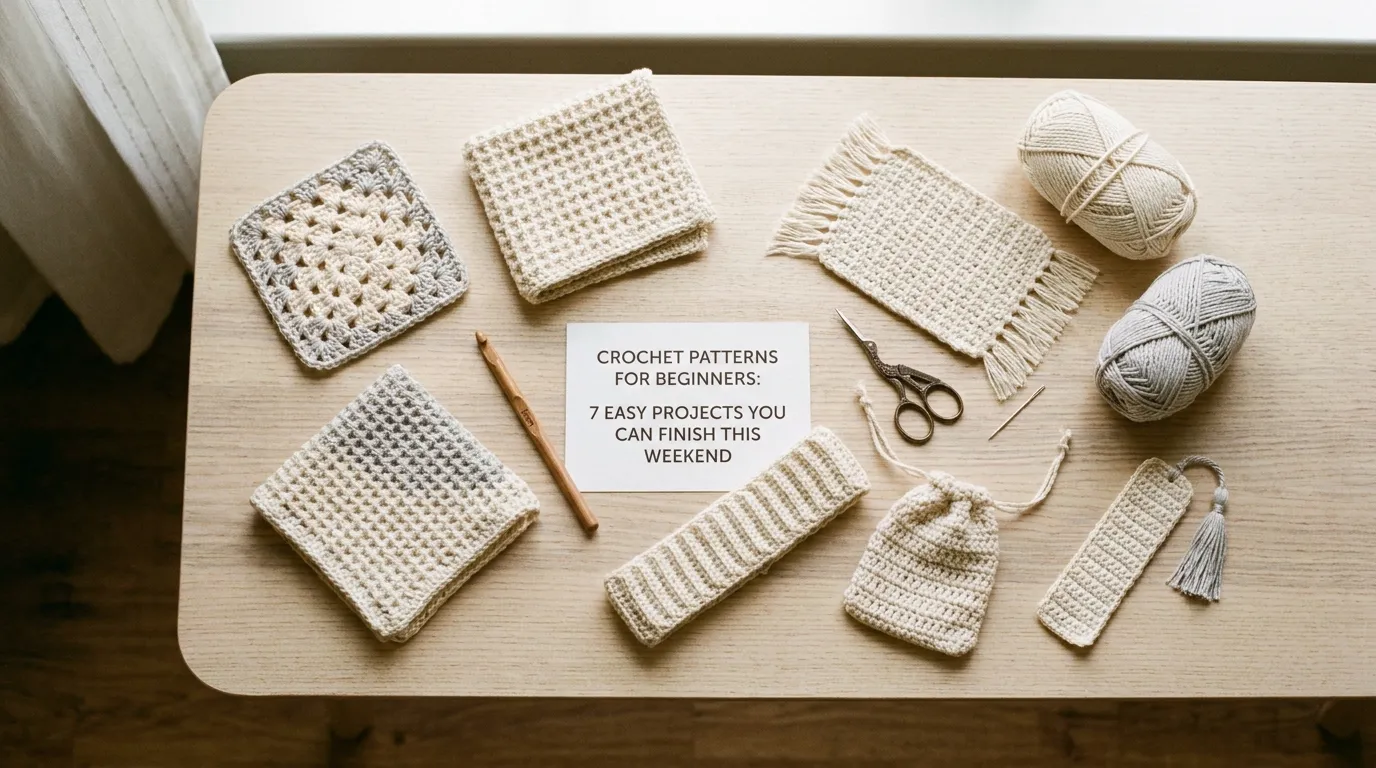
Picking up a hook for the first time can feel a little overwhelming. You open a tutorial, see a wall of abbreviations, and wonder how anyone turns a ball of yarn into a cozy blanket. The good news is that crochet is one of the most beginner-friendly crafts out there, as long as you start with the right projects.
This guide to crochet patterns for beginners walks you through everything you need before your first stitch: the tools worth buying, the five stitches that cover most patterns, how to read a pattern without getting lost, and seven simple projects that build your skills one step at a time. Whether you are a complete beginner or someone returning to the hook after years away, you will find a clear starting point here.
Table of Contents
What Makes a Crochet Pattern Beginner-Friendly?
Not every pattern labeled “easy” is actually easy. After helping many new crocheters, a few traits show up again and again in patterns that genuinely work for beginners.
They use only a few basic stitches. A good beginner pattern relies on chains, single crochet, and maybe double crochet. If a pattern asks you to learn five new techniques at once, it is not really a starter project.
They work in simple shapes. Squares, rectangles, and flat circles are far more forgiving than shaped garments with increases and decreases in many places.
They use smooth, light-colored, medium-weight yarn. This is more important than most people realize. You can see your stitches clearly, which makes mistakes easy to spot and fix.
They include clear instructions. The best patterns tell you the stitch count at the end of each row, so you always know whether you are on track.
They are small enough to finish. Finishing something quickly gives you a real confidence boost. A coaster or dishcloth teaches the same skills as a blanket, in a fraction of the time.
Keep these four points in mind and you will be able to judge any pattern before you commit to it.
Tools and Materials You Actually Need
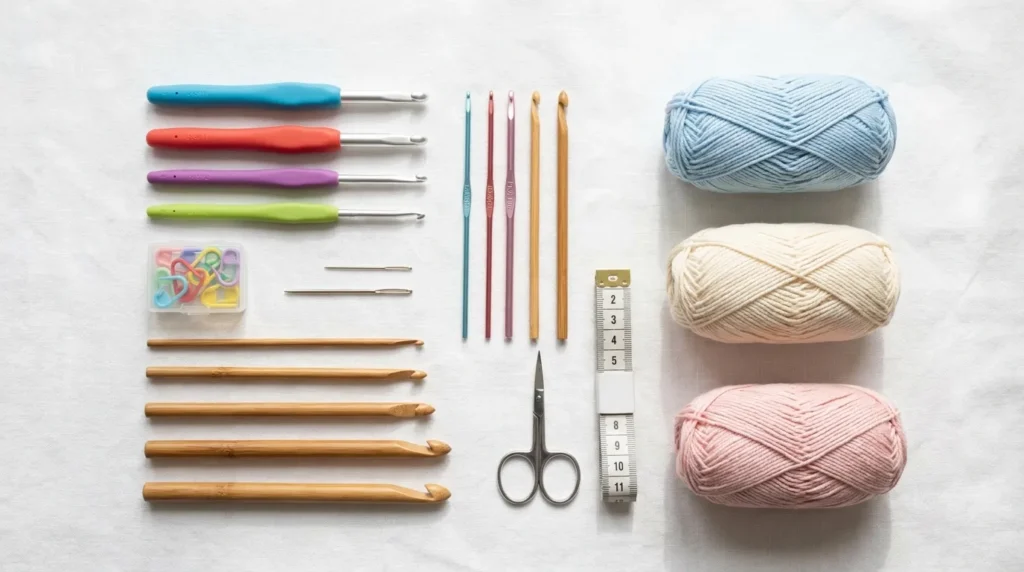
You do not need a craft store’s worth of supplies. For your first projects, this short list is enough.
A Crochet Hook
Start with a 5 mm hook (size H-8 in US sizing). It pairs well with medium-weight yarn and is comfortable to hold. Aluminum hooks glide smoothly through yarn, while bamboo hooks grip a little more, which some beginners prefer. Try one of each if you can, and choose whichever feels better in your hand.
Beginner-Friendly Yarn
Look for a medium-weight yarn, often labeled worsted weight or category 4. Pick a smooth cotton or acrylic in a light or solid color. Avoid dark colors, fuzzy yarns, and anything with a lot of texture for now. They hide your stitches and turn a simple row into a guessing game.
A Few Small Extras
- Scissors: any small, sharp pair will do.
- Tapestry needle: a blunt needle with a large eye, used to weave in your yarn ends.
- Stitch markers: small clips or pins that mark the first stitch of a row or round. Even a scrap of contrasting yarn works.
- Measuring tape: helpful for checking gauge and the size of your finished piece.
That is the whole kit. You can add more tools later, once you know what you enjoy making.
The 5 Basic Stitches Every Beginner Should Learn First
Almost every beginner pattern is built from the same small group of stitches. Learn these five and you can follow a huge number of patterns.
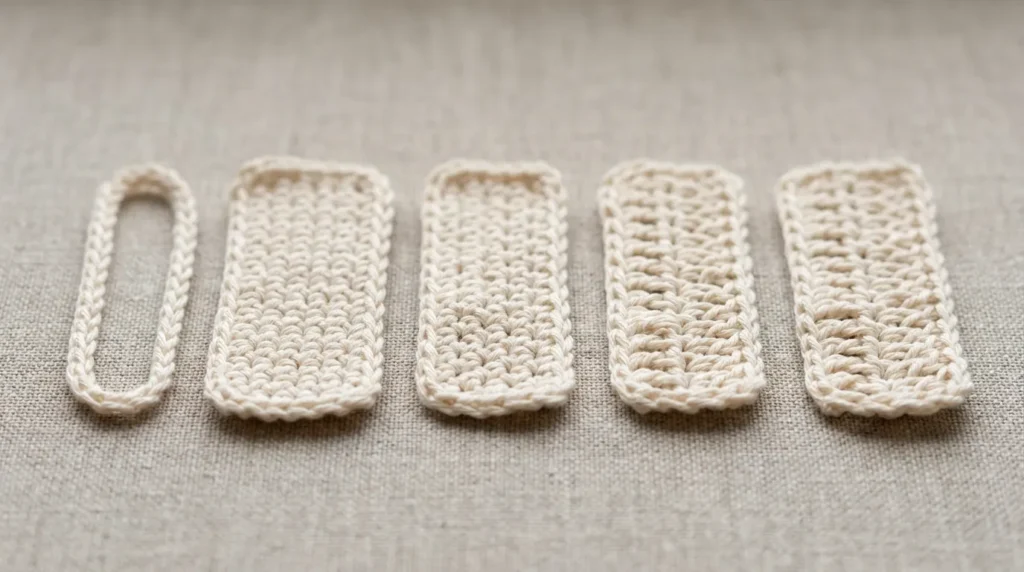
1. Slip knot and chain (ch). Every project begins with a slip knot on your hook, followed by a row of chain stitches. This is your foundation. Practice until your chains look even, neither tight nor loose.
2. Slip stitch (sl st). A very short stitch used to join rounds, move yarn across a piece without adding height, and finish edges.
3. Single crochet (sc). The workhorse of beginner crochet. It creates a dense, sturdy fabric, which makes it ideal for dishcloths, coasters, and bags.
4. Half double crochet (hdc). A little taller than single crochet. It works up faster and gives a softer fabric.
5. Double crochet (dc). A tall, quick stitch that produces a looser, drapey fabric. Many scarves, blankets, and granny squares use it.
A Quick Note on US vs. UK Terms
This trips up a lot of beginners. US and UK patterns use the same names for different stitches. A US single crochet is called a double crochet in UK patterns, and a US double crochet is a treble crochet in the UK. Before you start any pattern, check which terminology it uses. It is usually stated near the top. Every pattern on this site uses US terms.
How to Read a Crochet Pattern Without Getting Overwhelmed
A crochet pattern is just a set of shorthand instructions. Once you learn the code, it reads like a recipe.
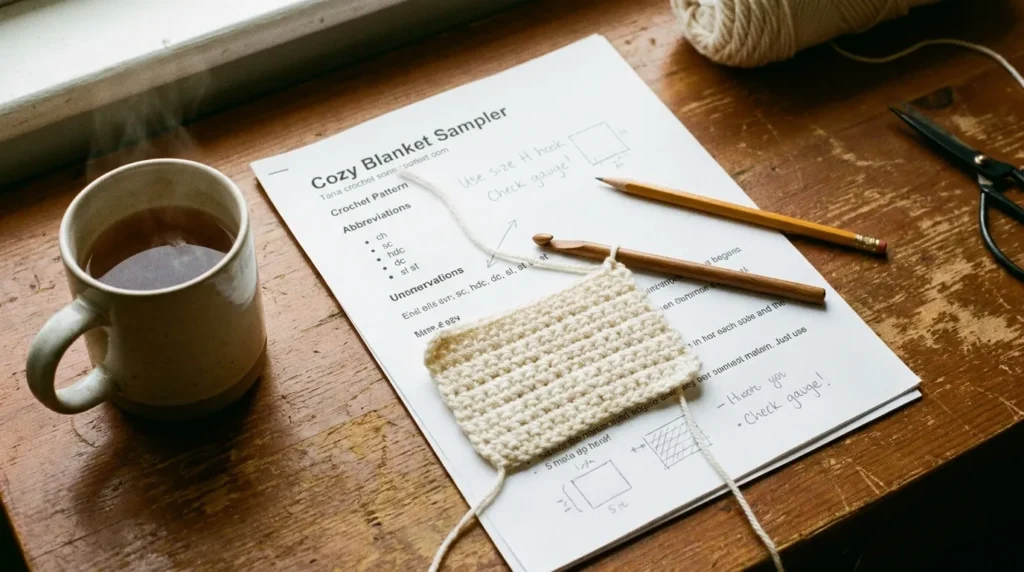
Abbreviations. Patterns use short forms such as ch, sc, dc, and sl st. A list of abbreviations normally appears at the top of the pattern. Keep it nearby until the terms become familiar.
Asterisks and repeats. Instructions between asterisks are repeated. “*Sc in next 2 stitches, 2 sc in next stitch; repeat from * around” means you do that sequence again and again until the end of the row or round.
Parentheses and brackets. Parentheses often group stitches that go into the same spot, for example (sc, ch 2, sc) in the next space. A number in parentheses at the end of a row, such as (24), is the stitch count you should have.
Gauge. Gauge is how many stitches and rows fit into a set measurement, usually 4 inches. For small flat items like coasters, you can safely skip it. For wearable pieces like hats, check it. A swatch takes ten minutes and can save you hours of frustration.
Turning chains. At the start of most rows you work a few chains to bring the yarn up to the height of the next row. Patterns tell you whether the turning chain counts as a stitch. Read that line carefully, because it is the most common reason beginners end up with edges that grow wider or narrower.
7 Easy Crochet Patterns for Beginners
These projects are arranged in a deliberate order. Each one adds just a little to what you learned in the previous one.
1. A Simple Chain and Practice Swatch
Before you make anything, make a swatch. Chain 20, then work single crochet back and forth for about 15 rows. This is not glamorous, but it teaches you tension, turning, and counting. When your edges look straight and your stitch count stays the same, you are ready to move on.
Skills practiced: chain, single crochet, turning.
2. A Basic Dishcloth
A cotton dishcloth is the classic first project, and for good reason. It is small, practical, and forgiving. Chain 30, then work rows of single crochet until you have a square. Mistakes will not matter much, and you will end up with something you can actually use in the kitchen.
Skills practiced: consistent tension, straight edges, finishing and weaving in ends.
3. Coasters in a Flat Circle
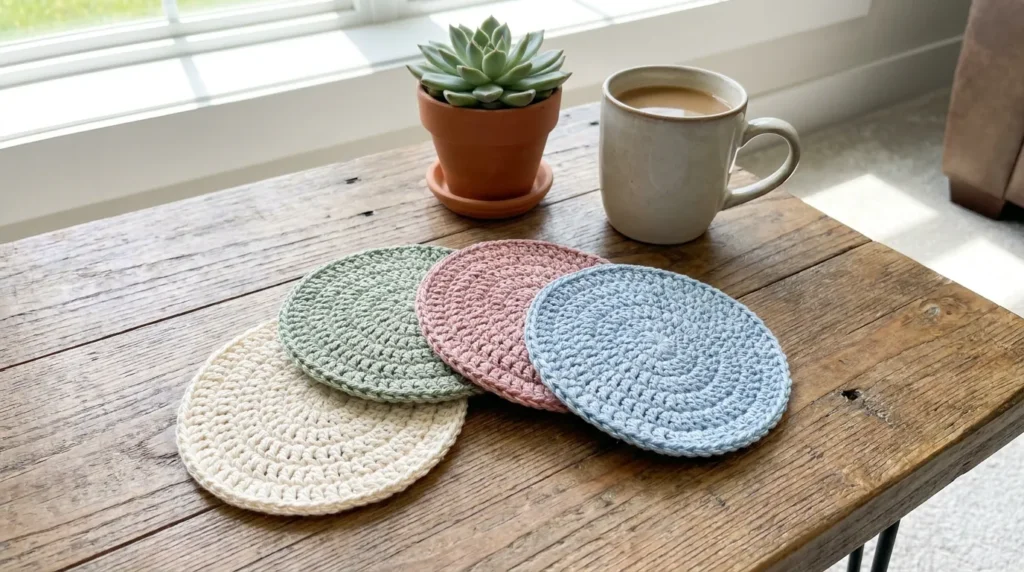
Coasters introduce working in the round. You start with a magic ring or a short chain joined into a loop, then add stitches evenly in each round so the circle stays flat. Do not worry if your first circle ripples or cups. That means you added too many or too few stitches, and it is a lesson everyone learns once.
Skills practiced: magic ring, increasing, working in rounds.
4. A Chunky Scarf
A scarf is just a very long rectangle. Use a thick yarn and a larger hook, and choose a simple stitch such as half double crochet or double crochet. Because the stitches are big, you can see exactly what you are doing and the project grows quickly, which keeps you motivated.
Skills practiced: half double crochet, double crochet, working a long project.
5. A Classic Granny Square
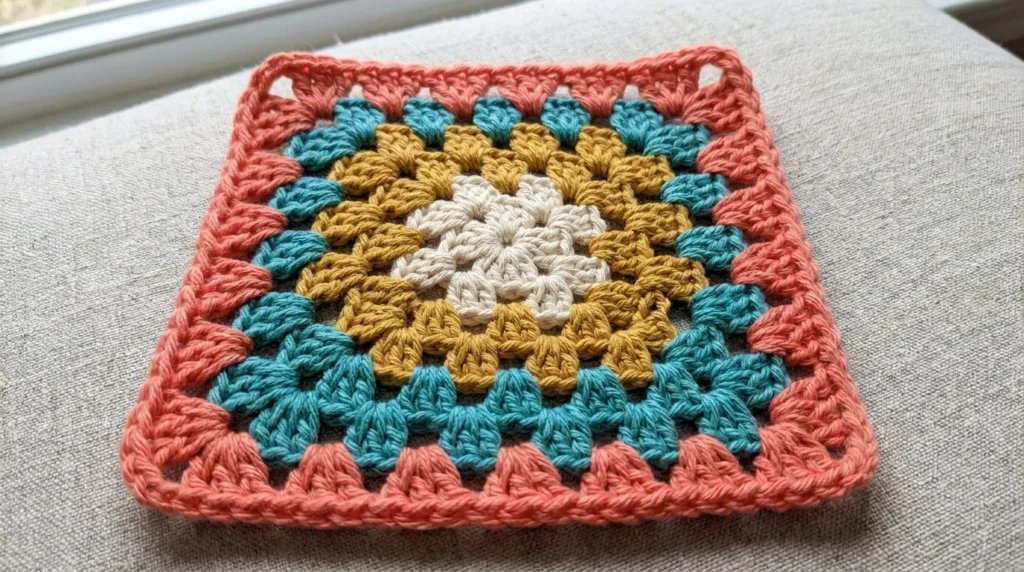
The granny square is a rite of passage. Worked in rounds of double crochet clusters, it looks impressive yet relies on only two stitches: chains and doubles. Make one square in a single color first. Once you are comfortable, switch colors each round and join several squares into a bag, a cushion cover, or a blanket.
Skills practiced: working in clusters, corners, changing colors, joining pieces.
6. A Simple Beanie
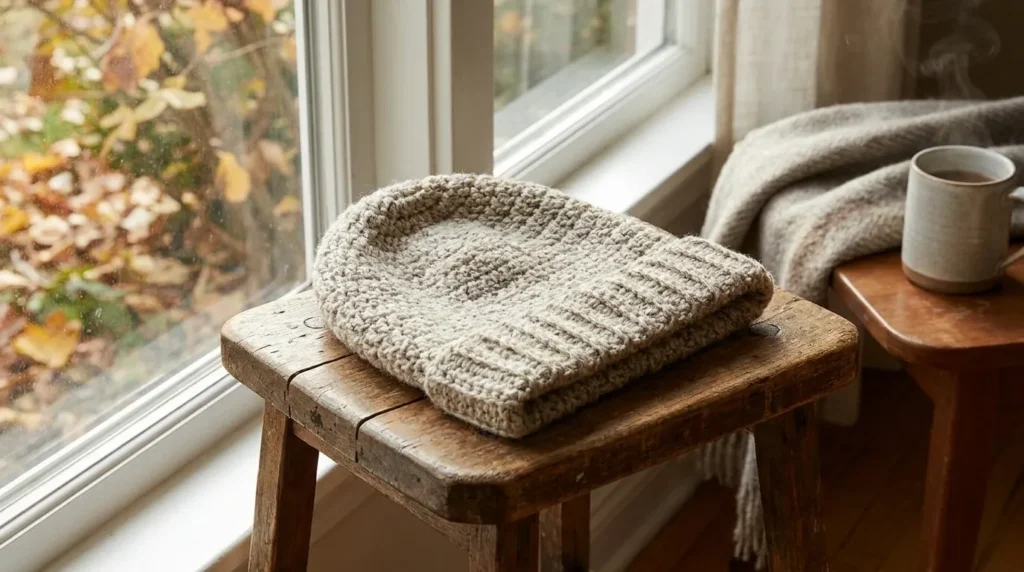
A beanie is a good step toward wearable projects. Worked from the top down in rounds, it combines the flat circle from the coaster with a straight tube. Gauge matters here, so make a swatch first. A snug-but-stretchy half double crochet fabric works well for beginners.
Skills practiced: gauge, working a circle into a tube, fit adjustments.
7. A Baby Blanket
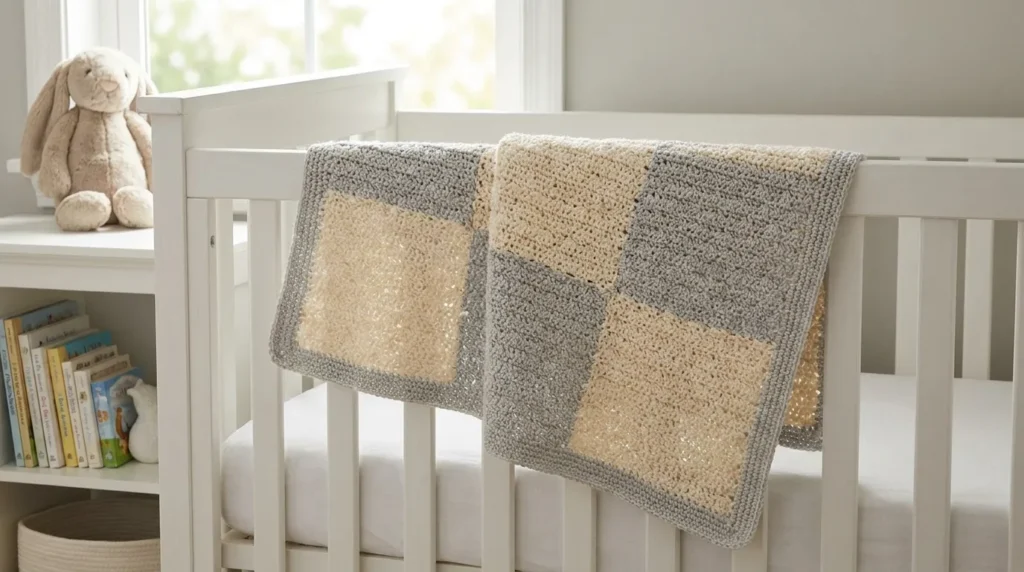
A baby blanket is simply a big rectangle in a soft yarn. By now you know how to start with a foundation chain, keep your edges straight, and weave in ends. Choose a simple repeating stitch pattern and enjoy the rhythm. This project takes longer, but it is calming, and it makes a thoughtful gift.
Skills practiced: stamina, even tension over many rows, simple borders.
Common Beginner Mistakes (and How to Fix Them)
Every crocheter makes these mistakes. Knowing about them in advance makes them less discouraging.
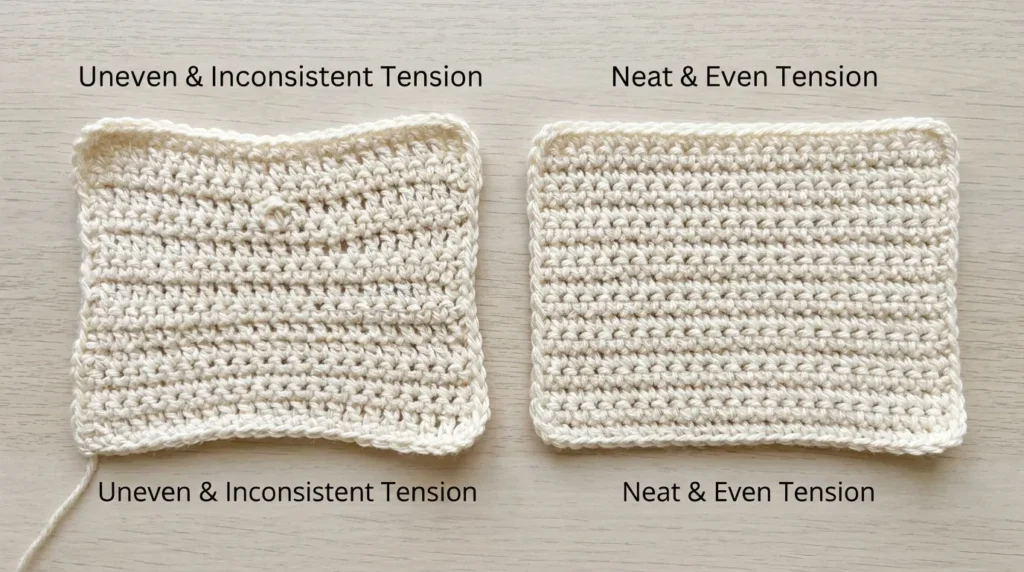
Your work keeps getting narrower or wider. This usually comes from miscounting stitches at the edges or mishandling the turning chain. Count your stitches at the end of every row for the first few projects.
Your tension is too tight. If it is hard to push your hook into the stitches, relax your grip. Some beginners hold the yarn like they are afraid it will escape. Loosen your hands, and consider going up one hook size.
You cannot find the first stitch of the round. Use a stitch marker. This one small habit prevents a lot of confusion when you work in the round.
You are tempted to keep going despite a mistake. If you spot an error a few rows back, pull the work out and redo it. Frogging, as crocheters call ripping out, is part of the craft, and it gets faster with practice.
You quit because the first project looks messy. It will look messy. Your tenth project will look much better than your first. Keep your early work as a record of progress.
Tips to Improve Faster
- Practice in short, regular sessions. Twenty minutes a day builds muscle memory better than one long weekend session.
- Learn from video. Seeing a stitch worked in real time often clears up what written instructions cannot.
- Finish small projects. Completing several quick projects teaches you more than abandoning one big one.
- Keep a project notebook. Write down the hook size, yarn, and any changes you made. You will thank yourself later.
- Join a community. Whether it is a local group or an online forum, talking with other crocheters helps you stay motivated and get unstuck.
Frequently Asked Questions
What is the easiest thing to crochet for a complete beginner?
A dishcloth or a simple square swatch in single crochet. Both use one stitch, have clear edges, and let you practice tension without a lot of pressure.
Which yarn and hook are best for beginners?
A 5 mm (H-8) hook with a smooth, light-colored, medium-weight (worsted) yarn is the standard recommendation. It is easy to handle, and you can clearly see each stitch.
How long does it take to learn to crochet?
Most people learn the basic stitches within a few days of regular practice. Becoming comfortable following patterns usually takes a few weeks. Your speed will vary, and that is perfectly normal.
Is crochet easier than knitting?
Many beginners find crochet easier because you work with one hook and one live stitch at a time. If you drop a stitch, it is usually simple to fix. That said, the best craft is the one you enjoy.
Should I learn US or UK terms first?
Choose the one that matches the patterns you plan to follow. If you are unsure, check the pattern before you begin, because the same stitch name can mean different things in each system.
Final Thoughts
Starting with the right crochet patterns for beginners makes all the difference. Choose simple shapes, learn a handful of basic stitches, read the pattern before you begin, and work through projects in a sensible order. Before long, the wall of abbreviations will look like plain instructions, and the hook will feel natural in your hand.
Ready to begin? Pick one of the seven projects above, gather your hook and yarn, and make your first chain today. Your first finished piece is closer than you think.