Crochet for Beginners: The Complete Guide
Every crocheter starts in the exact same place holding a hook for the first time and wondering how a single strand of yarn turns into something you can actually wear or use. I still remember that feeling, and years later, I still think crochet is one of the most rewarding crafts to learn precisely because the learning curve is so forgiving. This guide covers everything I wish someone had laid out for me when I started:
what crochet actually is, where it comes from, what you need to begin, the stitches worth learning first, the kinds of projects you can make, where the craft is heading in 2026, and the practical tips that make the early stages easier. Let’s start from the very beginning.
Table of Contents
1. What Is Crochet?
At its core, crochet is the craft of creating fabric by looping yarn or thread using a single hooked needle. Unlike knitting, which uses two needles and keeps multiple stitches active at once, crochet typically works one stitch at a time, which is part of why many people find it a more approachable entry point into fiber crafts.
The word itself comes from the French crochet, meaning “small hook” a fitting name, since the hook is really the only essential tool. With it, you can build flat fabric, work in rounds to create three-dimensional shapes, or combine both techniques within a single project. That flexibility is what allows crochet to produce everything from a simple dishcloth to an intricate lace shawl to a fully three-dimensional amigurumi toy.
What makes crochet particularly beginner-friendly is that mistakes are usually easy to spot and fix. Because only one loop is typically active on the hook at a time (compared to an entire row of live stitches in knitting), unraveling a mistake often called “frogging” in crochet circles, is usually far less intimidating.
2. History of Crochet
The exact origins of crochet are surprisingly hard to pin down, which is part of what makes the craft’s history so interesting. Unlike knitting, which has physical artifacts dating back centuries, crochet leaves behind very little archaeological evidence, since early practitioners often worked with hooks carved from wood, bone, or bamboo, materials that rarely survive.
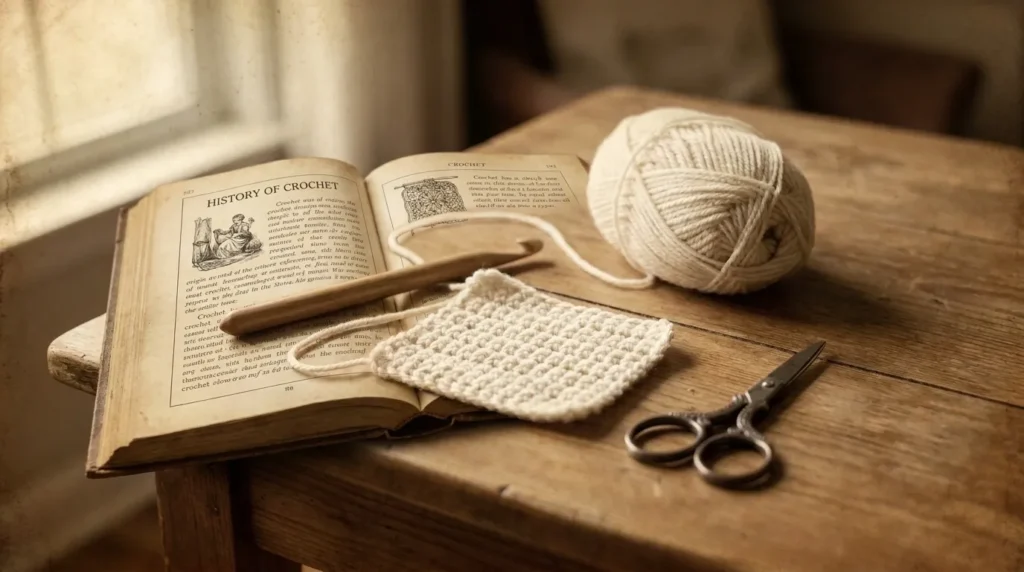
Most historians agree that crochet as we recognize it today became widespread in Europe during the early 19th century, with Ireland playing a particularly significant role. Irish crochet lace became an economic lifeline during the devastating famine years of the 1840s, when skilled lacemakers taught the craft to others as a way to earn income through delicate, intricate lacework that was exported and sold internationally.
From there, crochet spread and evolved across cultures, eventually becoming associated with the home-craft movements of the Victorian era, a mid-20th-century resurgence tied to the granny square, and today’s modern revival driven in large part by social media platforms like Pinterest and Instagram, where handmade, slow-craft hobbies have found an enthusiastic new generation of makers.
3. Essential Crochet Supplies
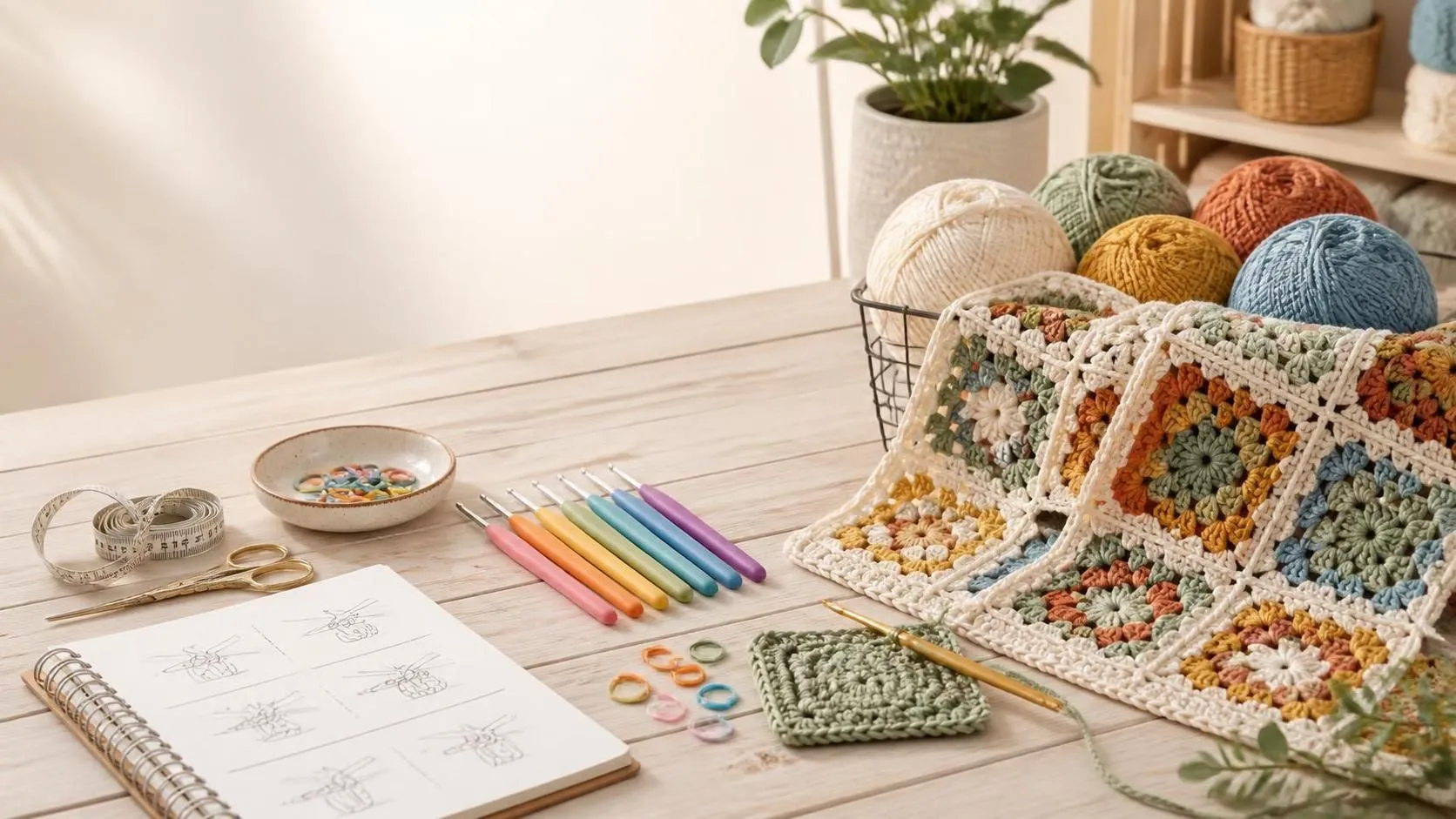
Before diving into stitches, it helps to know exactly what you need, and just as importantly, what you don’t. Crochet has a refreshingly low barrier to entry compared to many other crafts.
The essentials:
- A crochet hook; Hooks come in a range of sizes, typically labeled in millimeters. A mid-size hook (around 4-5mm) paired with a worsted weight yarn is the most beginner-friendly starting combination.
- Yarn; Worsted weight (medium) yarn in a light, solid color is ideal for learning, since it’s easy to see your stitches clearly. Avoid dark colors, fuzzy textures, or variegated yarns until you’re more comfortable.
- Scissors; Any small, sharp pair will do.
- A yarn needle; Used for weaving in ends and sewing pieces together.
Genuinely useful, but optional:
- Stitch markers ; Small clips or rings that help you track rounds, especially useful once you move into three-dimensional projects.
- A measuring tape ; Important once you start garment or sizing-dependent projects.
- Row counters ; Helpful for patterns with many repeated rows.
One of the best things about starting crochet is that you genuinely don’t need much to begin. A hook, a ball of yarn, and a pair of scissors is enough to learn every fundamental stitch.
4. Basic Crochet Stitches to Learn First
Nearly every crochet pattern, no matter how advanced, is built from a small handful of foundational stitches. Learning these in order gives you a natural progression and a solid base for everything that follows.
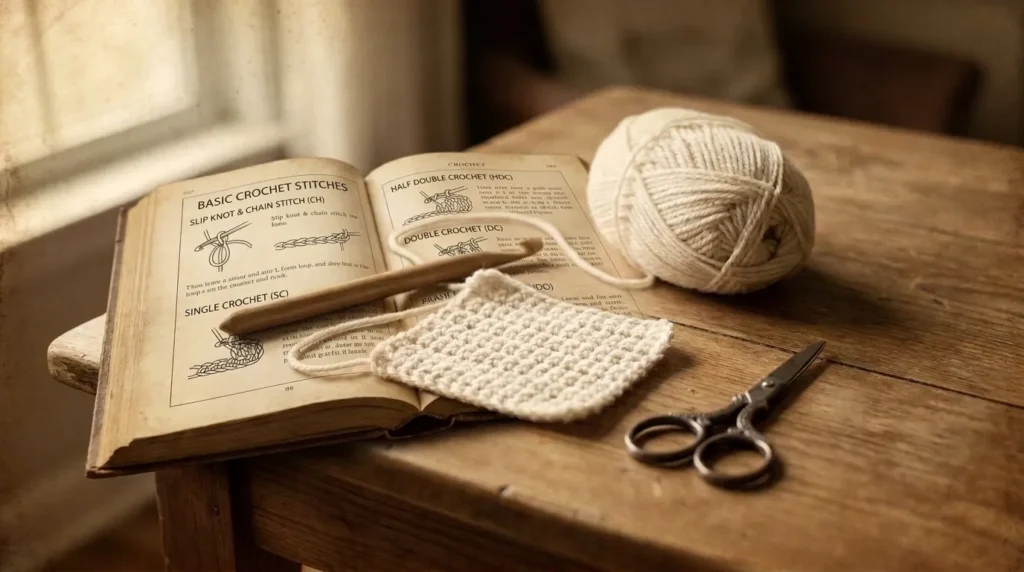
- Chain Stitch (ch): The foundation of almost every project; a simple series of loops that creates your starting row.
- Slip Stitch (sl st): A low, flat stitch mainly used for joining rounds or moving across stitches without adding height.
- Single Crochet (sc): The shortest “real” stitch, producing a dense, tight fabric. This is the backbone of amigurumi and many textured projects.
- Half Double Crochet (hdc): A step taller than single crochet, offering a nice balance between density and drape.
- Double Crochet (dc): Taller still, and one of the most commonly used stitches for blankets, garments, and home decor.
- Treble/Triple Crochet (tr): The tallest common stitch, useful for open, lacy fabric and faster-growing projects.
Once these six stitches feel comfortable, you already have the building blocks for the vast majority of patterns you’ll encounter, increases and decreases, color changes, and more advanced techniques all build directly on top of this foundation.
5. Types of Crochet Projects
One of the most exciting things about crochet is just how many directions it can go once you’ve got the basics down. Here’s a quick overview of the major project categories, along with where to go for a deeper dive into each:
- Crochet Bags : From totes to clutches, bags are a fantastic way to practice shaping and construction while making something genuinely useful.
- Baby Crochet : Blankets, booties, hats, and gift sets made for the smallest, most special recipients.
- Crochet Wearables : Tops, cardigans, shawls, and other garments, ranging from simple to genuinely advanced.
- Home Decor Crochet : Pillow covers, wall hangings, baskets, and other pieces that bring handmade texture into your space.
- Amigurumi : Small, stuffed, three-dimensional toys and characters, from simple shapes to fully articulated dolls.
Each of these categories has its own learning curve, but all of them build on the same core stitches covered above. The best starting point is usually whichever category excites you most motivation matters more than theoretical “difficulty” when you’re picking your first real project.
6. Crochet Trends 2026
Like any craft, crochet evolves with the seasons and with what’s circulating on platforms like Pinterest. A few trends stand out right now:
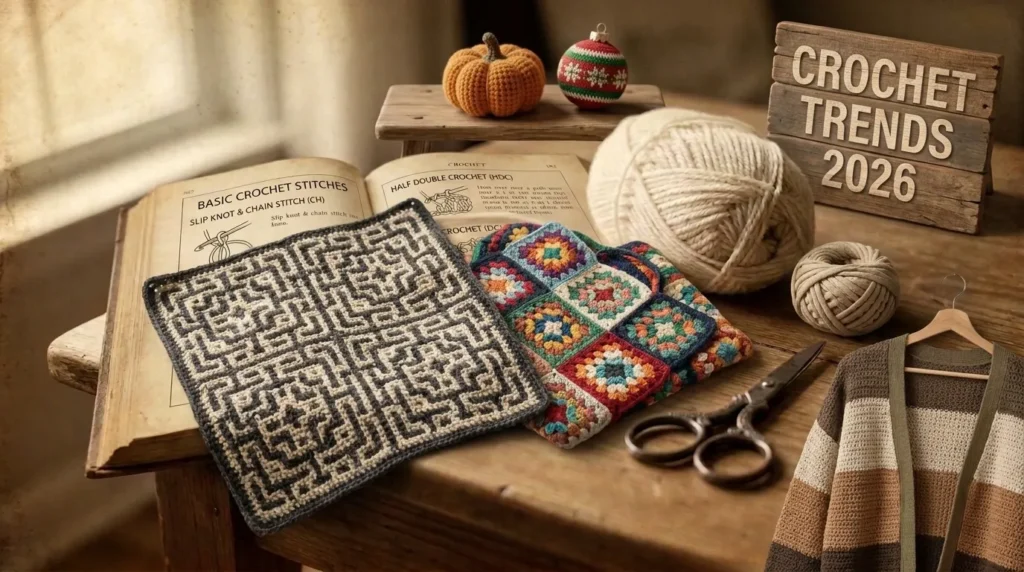
- Garment crochet: Wearable crochet has moved well beyond blankets and amigurumi, with cardigans, tops, and statement pieces dominating fashion-focused crochet content.
- Mosaic crochet: A technique using two colors and skipped stitches to create bold, graphic imagery, popular for both garments and home decor.
- Granny square resurgence: The classic motif is back in a big way, appearing in everything from bags to full garments.
- Sustainable and upcycled crochet: T-shirt yarn and other reclaimed materials are increasingly popular for home decor and market bags.
- Seasonal and holiday-specific crochet: Themed projects tied to Halloween, Christmas, and other holidays continue to grow as a category of their own.
Following trends isn’t necessary to enjoy crochet, but it’s a great way to find fresh project inspiration once the basics feel comfortable.
7. Tips for Crochet Beginners
A few honest, practical tips for anyone just starting their crochet journey:
- Start with a swatch, not a project. Practice your tension and stitch consistency on a small square before committing to something bigger.
- Don’t fear frogging. Unraveling and redoing a section is completely normal, even for experienced crocheters, it’s part of the process, not a failure.
- Count your stitches often. Especially early on, losing or gaining stitches without noticing is one of the most common beginner frustrations.
- Choose light-colored, smooth yarn to start. Dark or fuzzy yarn makes it much harder to see individual stitches while you’re still learning to recognize them.
- Watch videos alongside written patterns. Crochet is a very visual, tactile skill, and seeing a stitch worked in motion often clarifies written instructions instantly.
- Give yourself permission to go slowly. There’s no reward for rushing the craft is meant to be relaxing, and speed comes naturally with practice.
Conclusion: Your Crochet Journey Starts Here
That’s really the whole foundation of crochet a hook, some yarn, a handful of stitches, and a lot of room to grow from there. Whether you’re drawn to quick amigurumi projects, cozy home decor, or ambitious garment-making, every single path starts with the same basic stitches covered in this guide.
Ready to pick your first project? Explore our crochet bag ideas, baby crochet ideas, crochet wearables, home decor crochet, and amigurumi crochet collections to find the project that excites you most.
Your crochet journey starts with a single stitch. Let’s get hooking!